Richard Ponzio
Director and Senior Fellow, Global Governance, Justice & Security Program
Stimson Center
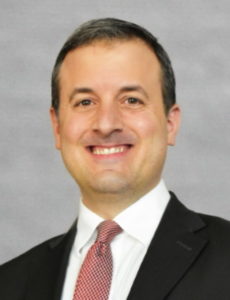
Richard Ponzio is Director of the Global Governance, Justice & Security Program and a Senior Fellow at Stimson. Previously, he directed the Global Governance Program at The Hague Institute for Global Justice, where (in a partnership with Stimson) he served as Director for the Albright-Gambari Commission on Global Security, Justice & Governance. He brings expertise in the areas of global and national democratic institution-building, global political economy, South-Central Asia, and the role of international institutions in responding to state fragility, climate instability, global financial volatility, and population displacement.
Ponzio is formerly a Senior Adviser in the U.S. Department of State’s Office of the Special Representative for Afghanistan and Pakistan, where he conceptualized and coordinated Secretary Hillary Clinton’s and later John Kerry’s New Silk Road initiative. Earlier he served as a Senior Strategy and Policy Officer in the State Department’s Bureau of Conflict and Stabilization Operations, where he initiated a global network of multi/bilateral peacebuilding and stabilization organizations.
From 1999-2009, Ponzio served in a variety of senior policy and strategic planning positions for the United Nations in Afghanistan, Kosovo, Pakistan, Sierra Leone, the Solomon Islands, and New York. From 1997-1999, he was a Visiting Fulbright Fellow at the Mahbub ul Haq Human Development Centre in Islamabad, where his research focused on the governance-security-development nexus in South Asia.
Ponzio has published widely in academic and policy journals (including Global Governance, Foreign Policy, and Survival), edited volumes, newspapers, U.N. policy reports (including national, regional, and global Human Development Reports), and books, including Democratic Peacebuilding: Aiding Afghanistan and other Fragile States (OUP, 2011) and Human Development and Global Institutions: Evolution, Impact, and Reform (Routledge, January 2016, with Dr. Arunabha Ghosh). He serves on the board of the Academic Council on the UN System.
Ponzio completed his doctorate in politics and international relations at the University of Oxford on a Clarendon Scholarship and undertook earlier studies at The Fletcher School of Law & Diplomacy (M.A.), The Graduate Institute Geneva (M.A.) as a MacJannet Fellow, and Columbia University (B.A).
Related Content on GGIN

From Global Governance Innovation Network, T20 U.S.
New Directions for UN-G20 Collaboration in an Age of Uncertainty: A Retreat for International Policy-Makers and Researchers
16 November 2026, , In-Person
Conference
From T20 U.S.
T20 U.S. Summit
18 November 2026, 9:00 AM, Online
From Global South Perspectives Network, T20 U.S.
Critical Minerals & the G20: From Strategic Resources to Developmental Assets
12 October 2026, 10:00 AM EST, Online
Global Policy Dialogue
From Doha Forum, Global Institute for Strategic Research, Hamad Bin Khalifa University
MENARA Global Policy Dialogue: Greater Middle East Perspectives on Restoring Trust in an Age of Uncertainty
7 December 2026, , Online
From
From Consensus to Coalitions: The Think Tank Agenda for the G20 Handover
22 September 2026, 1:15, In-Person
Commentary
The Orphan of the Summit of the Future: The Declaration on Future Generations
Author


Commentary
The Nation Is Not Alone. We Need Reflexive Multilateralism
Author
Commentary
As Sea Levels Rise, Where Do Countries End? United Nations Anchors Maritime Boundaries
Author
Commentary
Can We Rethink Growth Beyond GDP? A Recent UN Report Believes So
Author
From
T20 U.S.: Engaging Diverse Voices in the G20 U.S. for Better Policymaking and Action in Uncertain Times
25 September 2026, 9:00 AM, In-Person
From Global Governance Innovation Network
Taking Forward the Pact for the Future: Assessing Progress & The Road Ahead Two Years Before the 2028 High-Level Review
24 September 2026, 1:15 PM, In-Person
Research Launch
From Global Governance Innovation Network
“Redefining Global Trust” – Future of International Cooperation Report 2026 NYC Launch
21 September 2026, 1:00 PM, In-Person
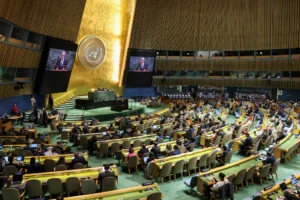
Summary and Highlights
GGIN’s UNGA@81 Spotlight
Author
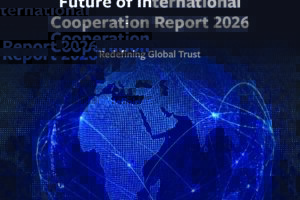
Report
Future of International Cooperation Report 2026: Redefining Global Trust
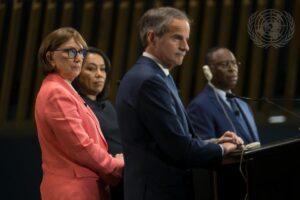
Commentary
The UN Security Council Needs Reform. What do the Candidates for Secretary-General Think About It?
Author
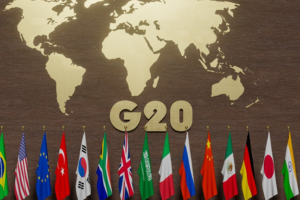
T20 U.S. Summit
Author


Commentary
The Next UN Secretary-General Must Deliver
Author

T20 U.S. Summit
Author
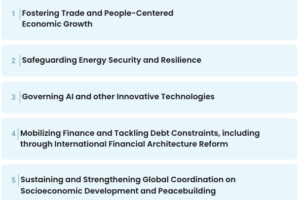
T20 U.S. Workstreams
Author