


GGIN and C4UN at the Hamburg Sustainability Conference
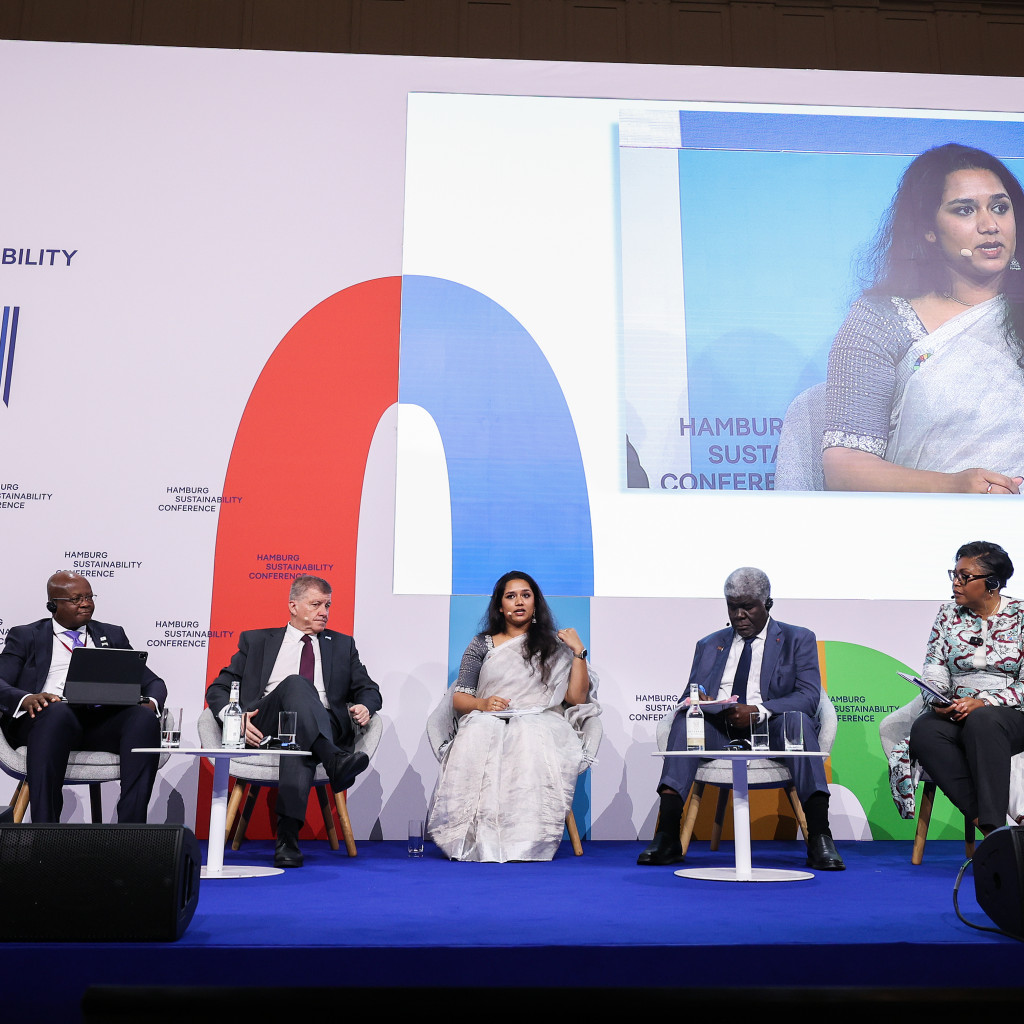
Contributed by Coalition for the UN We Need, Global Governance Innovation Network
Posted 17 June 2025
Reimagining Multilateralism: Reflections on Hamburg Sustainability Conference 2025
The 2025 Hamburg Sustainability Conference (HSC) marked a critical moment in the evolving global dialogue around sustainable development, multilateral reform, and intergenerational justice. For leaders of the Coalition for the UN We Need (C4UN) and the Global Governance Innovation Network, the conference was more than just another gathering, it was a catalyst for coalition-building, concrete action, and a hopeful reassertion of international cooperation in a fractured world.
We spoke with several key figures from the Coalition to distill their top takeaways from this year's forum.
A Renewed Emphasis on Equity and Global Solidarity
Florence Syevuo, Co-Chair of C4UN and Director of SDG Kenya Forum, emphasized the growing economic disparity between nations as a critical issue spotlighted in Hamburg. "The gap between the Global North and Global South is becoming unignorable," she said. "We can no longer rely on the traditional donor-based model. There is an urgent need to empower local-level engagement and capacity-building in the Global South."
At the same time, Syevuo highlighted encouraging signs of renewed commitment from European countries to support reform efforts in global institutions like the United Nations and the World Bank. She noted growing political will to include civil society and non-state actors in these processes. This shift could democratize multilateralism in meaningful ways.
"The call for global solidarity is not abstract anymore," Syuevo added. "It's about reducing inequality and ensuring that reforms reflect the needs of humanity, not just economic elites."
Intergenerational Justice and the Role of International Law
For Neshan Gunasekara, CEO of the World Future Council, and an ardent advocate for intergenerational justice, the session on "Securing Innovation for Future Generations," was among the most consequential.
"This was not just symbolism. It's about creating binding structures that ensure future generations have a legal standing in today's decisions," he explained. Drawing from his international law background, Neshan stressed that future-focused frameworks must be grounded in existing legal norms. "The declaration on future generations may lack a rights-based framework in its current draft, but that doesn't mean it's disconnected from international law. Quite the opposite, it should complement it."
He also commended the meaningful integration of youth voices into the policy process. "Unlike last year, this wasn't just about ticking the box. Young people were involved in shaping the discussion weeks before the forum began."
A Platform for Action, Not Just Rhetoric
Maria Fernanda Espinosa, former President of the UN General Assembly and Executive Director of Global Women Leaders Voices, underscored that HSC has become much more than a talking shop. "What stood out for me is that this forum isn't just about narrative, it's a deal-making space," she said. "This year, commitments were signed. I'm personally signing an agreement this afternoon on urban sustainability. Others are doing the same."
She pointed to the value of HSC's multi-stakeholder environment, where ministers, private sector leaders, UN agencies, and youth representatives were all active participants. "We need these coalitions of the willing to eventually feed into concrete multilateral decisions. These are seeds that could reshape global governance if nurtured."
Cross-Sector Collaboration and Innovation
For Alyn Ware, a longtime peace and disarmament advocate, the diversity of participants at the conference was its greatest strength. "You had corporate executives, tech developers, legislators, government officials, and grassroots activists all in the same rooms," he noted. "It's that unique mix that sparks real innovation."
He was particularly inspired by sessions exploring the intersection of artificial intelligence and the Sustainable Development Goals (SDGs). "There's growing awareness of the carbon footprint of AI. We're now talking seriously about how to harness tech without undermining sustainability."
Another powerful moment, Ware said, came from symbolic gestures like leaving a vacant chair on a panel to represent future generations. "It reminds us who we're truly accountable to."
Youth Leadership at the Forefront
Nudhara Yusuf, Co-Chair of Coalition for the UN We Need and Executive Coordinator of the Global Governance Innovation Network, echoed many of these sentiments. "It was heartening to see governments, not just civil society, championing future-focused governance," she said. "It shows growing political commitment to long-term thinking at both national and multilateral levels." Reflecting also the movement from Jamaica and Netherlands to co-chair a Group of Friends on Future Generations at the UN.
But what impressed her most was the increased emphasis on developing youth leadership within the HSC program. "This isn't just about visibility, it's about building a platform for the next generation of global experts and change-makers. That's where the long-term impact of conferences like these lie."
Yusuf also recognized the conference as a critical convening space that allows time for deep bilateral conversations and agenda setting for the year ahead.
Looking Forward: From Dialogue to Transformation
The 2025 Hamburg Sustainability Conference left C4UN leaders both energized and cautiously optimistic. The challenges remain vast; climate instability, economic inequality, and geopolitical fragmentation chief among them. But the Coalition's takeaways from Hamburg signal a clear shift: from rhetorical solidarity to concrete, inclusive action.
Whether through embedding legal protections for future generations, forming strategic funding partnerships, or elevating youth voices into the heart of governance processes, the seeds of systemic change are being planted worldwide through various forums.
As Maria Fernanda Espinosa put it: "The ideal scenario is that these coalitions of the willing grow into global institutions of shared decision-making. Multistakeholder discussions are where the roots are taking hold."
Produced by the Coalition for the UN We Need Secretariat
Downloads
Geography
topics
Stay Informed
Receive email updates about the Global Governance Innovation Network and related research.
You can opt out at any time. Read our privacy policy.